From Cocoa Bean to Chocolate: Seven Stages

Behind a single square of chocolate sit the fruit of a tropical tree, days of fermentation, drying in the sun and a cooling curve measured in degrees. This piece follows the cocoa bean's journey into chocolate step by step: which stage softens the acidity, which builds the aroma, and which gives the bar that familiar snap.
It all starts with a fruit
The cacao tree grows on both sides of the equator, in a humid, shaded climate. Its fruit usually hangs not from a branch but straight from the trunk: a pod larger than your palm, yellow-orange or purple. Open it and you will not see chocolate — inside are wet beans wrapped in a white, sticky, fruity-smelling pulp. Bite one and it tastes bitter and astringent; nothing about it suggests chocolate. This is the most surprising fact about the whole process: the flavour of chocolate is not created on the tree. The tree supplies only the raw material; the flavour is built in the steps that follow, by human decisions and by time. That is why two sacks of beans from the same region can turn into two chocolates that taste nothing alike. Once the pods are harvested, the clock starts. The pulp is still sweet and alive, the bean is still ready to germinate, and neither a fridge nor packaging will stop that. So as soon as a pod is opened, the beans go to fermentation without delay — that first decision shapes every stage after it. But when does a bitter, wet bean begin to smell like chocolate? Sooner than you would expect: right at the first stage.
Fermentation: the days when flavour is born
The beans go into wooden boxes, or under banana leaves, with the pulp still on them. Yeasts and bacteria from the air start feeding on the sweet pulp, the mass heats up, juice drains away, and a chain of chemical reactions begins inside the bean. Over several days the bean loses its ability to germinate, its colour turns from purple to brown, the harsh bitterness fades, and the aroma precursors of the future chocolate appear — the raw material for molecules that will later become smell. This stage is a question of measure. Under-fermented beans give a hollow, astringent chocolate. Over-fermented ones bring off-notes of vinegar or mould. So the mass is turned on time, the temperature is watched, and every plantation finds its own rhythm over the years. What is striking is that the process is usually controlled not by an instrument but by a human nose and hand. Fermentation also sets the ceiling for everything that follows: roasting and conching can only reveal the potential created here, never invent flavour out of nothing. Badly fermented beans will not become good chocolate — that is the first and strictest condition of the whole chain. What fermentation gives the chocolate:
- Turns the purple colour brown and softens the harsh astringency.
- Creates the chemical precursors of fruit, floral and dried-fruit notes.
- Balances the acidity — and, taken too far, leaves a vinegary note behind.
- Prepares the bean to respond correctly to heat in the stages that follow.


Drying: the simple step that demands patience
Straight out of fermentation the bean is still wet, and in that state it can be neither stored nor shipped. It is spread in a thin layer in the sun, on wooden or bamboo tables, and dried for days, raked over now and then. The aim is to bring the moisture down to a level where the bean will neither go mouldy nor dry out into a lifeless taste. Hurrying is expensive here. Dried fast with hot air, the volatile acids left over from fermentation stay locked inside and come back later in the finished chocolate as a sharp, vinegary edge. Slow drying in open air lets some of those acids quietly evaporate. If rain arrives, the whole batch is at risk, which is why drying beds are often built on wheels with a roof that slides over them. After that the beans are bagged and, more often than not, travel to a workshop on the other side of the world. This is what reaches the chocolate maker's bench: a dry, brown bean that still does not taste of chocolate. The first heat is what begins to change that.
Roasting: where the aroma is written
Roasting works on the same principles as with coffee, but it is more delicate. The bean is heated with measured warmth in a rotating drum; the sugars and amino acids inside react with each other, and the precursors built during fermentation finally turn into aroma the nose can detect. The familiar smell that fills a workshop is born at exactly this stage. At the same time some of the remaining moisture and acidity evaporates, and the shell grows brittle and lifts away easily. There are two schools here. Low heat over a long time preserves fruity, lively, slightly tart notes. High heat strengthens the roasted-hazelnut, coffee and caramel side, but go one step too far and all the delicacy of the origin disappears under a burnt layer. That is why a separate roast profile is built for each origin. In small workshops that profile does not stay on paper: a handful of beans is taken from every batch and tasted, and next time the temperature or the duration shifts a little. This is not a fixed recipe but continuous correction. What roasting controls:
- Decides how much acidity stays in the chocolate.
- Sets the balance between fruity notes and roasted ones.
- Makes the shell come away from the bean cleanly.
- Reduces the microbiological risk in the bean through heat.
Grinding: from solid bean to flowing mass
The shell is winnowed off the roasted bean and the inside is broken into nibs. Those nibs are ground between stone or steel mills. Something unexpected happens: instead of powder you get a liquid. The reason is that roughly half of the bean is cocoa butter — the heat of friction melts the fat and the mass begins to flow. This thick, dark liquid is called cocoa mass; the trade also calls it "cocoa liquor", though despite the name it contains no alcohol. Two things are settled at this stage. First, the recipe: sugar, extra cocoa butter and, for milk chocolate, milk powder are added to the mass. Second, fineness. The human tongue can pick out particles above a certain size; if they stay coarser than that, the chocolate feels sandy in the mouth. The classic method runs the mass for hours in a stone-roller melangeur; industry passes it repeatedly between steel rollers instead. Now we have a fine liquid that still tastes rough. Softening it takes the longest stage of all.
Conching: hours of smoothing out
Conching means stirring the mass continuously for a long time under gentle heat. The name comes from the shape of the first vessel used — the Spanish "concha", a shell. From the outside nothing seems to happen: the liquid turns for hours, sometimes for more than a day. In fact two jobs are being done at once. The first is cleaning. Volatile acids and sharp, astringent compounds left over from fermentation and roasting evaporate from the open surface; this is where the edge of the chocolate softens. The second is coating. Every sugar and cocoa particle gets wrapped in a thin film of fat, the mass turns fluid and melts smoothly on the tongue. How long to conch is a question of style. A short conche keeps the character, the acidity and the sharp signature of the origin. A long one gives a softer, more velvety chocolate, but past a certain point the flavour flattens out and the difference between origins is erased. In other words, "the longer the better" does not hold here. Now the mass tastes good. But it still neither shines nor snaps — that secret belongs to the final stage.
Tempering: gloss, snap and the secret of the white bloom
Cocoa butter is a fat with several faces: as it cools it can set into a number of different crystal forms, and only one of them gives us what we want. Tempering is the act of choosing that form. The mass is melted, cooled to a specific point, then warmed back slightly and poured into moulds. Properly tempered chocolate shines, does not stick to your fingers at room temperature and breaks with a dry, clean snap. The dense crystal structure also makes it harder for the fat to migrate to the surface, so the chocolate keeps its looks for longer. One widespread misconception is worth correcting here: the greyish-white film on a chocolate bar is not mould and not a sign of spoilage. It is called bloom, and in most cases it is the result of temperature swings — put chocolate in the fridge, bring it back into a warm room, and cocoa butter or sugar rises to the surface. Such chocolate is perfectly edible; it has simply lost its gloss, its texture and its snap. Which means that how you store chocolate at home matters at least as much as the work done in the workshop. And there is a very simple way to test it.


Why craft chocolate tastes different
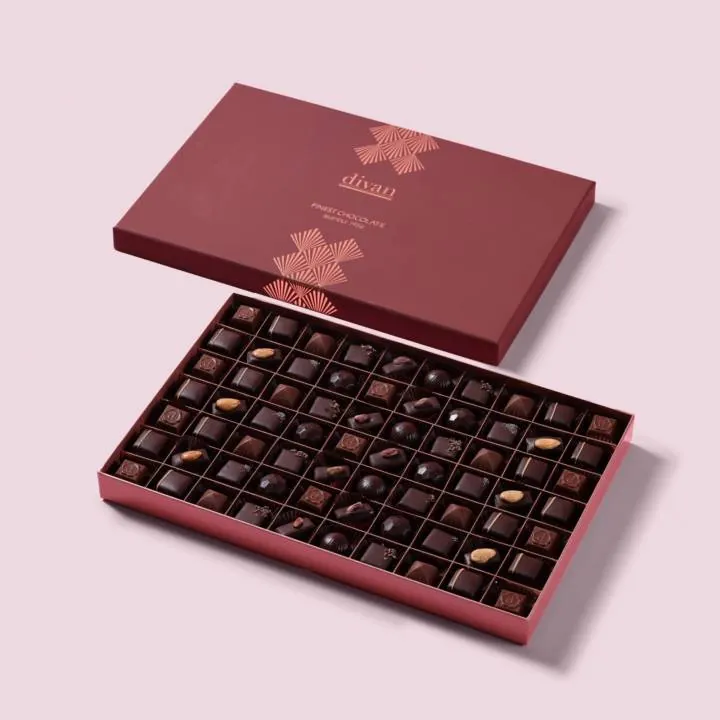
The difference between industrial and craft chocolate is not magic — it is the number of decisions taken. In mass production the main goal is consistency: origins are blended, the profile is locked, and every batch repeats the last one — familiar, predictable, safe. In small production a separate choice is made at every stage: how far to roast this particular origin, where to stop the conche, whether to soften the acidity with sugar or leave it as it is. The second difference is in the composition. In good chocolate the fat comes from the cocoa bean itself — and, in milk versions, from the milk as well; in cheap alternatives part of that fat is replaced with other vegetable oils, and the chocolate leaves a waxy, heavy trace on the tongue. The third difference is time. Chocolate that travels a short road reaches the shelf fresh; a product built to survive months in transit changes at the recipe level — more sugar, more stable, but a less delicate filling. In filled chocolates the difference is especially clear. This is not a difference between good and bad but between two different aims; which one suits you is something you decide in front of the shelf. Signs worth noticing on the shelf:
- The ingredient list is short, and no vegetable fat other than cocoa butter appears on it.
- The taste can shift a little from batch to batch; that is not a flaw, it is the fingerprint of the origin.
- The fillings are built for flavour, not for a long shelf life.
- In small production the range can change with the season; not everything is available every month of the year.
- The label states the origin or the cocoa percentage rather than settling for the word "chocolate".
A five-minute tasting at home
All of these stages can be read in a single square of chocolate, and you do not need to be an expert to do it. Take the chocolate at room temperature rather than from the fridge, put your phone aside and give it five minutes. The order is always the same: look, snap, smell, melt, wait. The most interesting part appears in comparison. Taste two different varieties from the same brand side by side and you will feel the difference between fermentation and roasting with your own tongue for the first time: one comes across as more acidic and fruity, the other as more roasted and nutty. After two or three tries the words for describing them arrive by themselves, and choosing in a shop becomes far easier. One warning about storage is in order: do not keep chocolate in the fridge. Cocoa butter absorbs surrounding smells easily, and the humidity of a fridge leaves marks on the surface. A cool, dry, dark, odour-free cupboard shelf is far better. And do not try to keep an opened box for long — filled chocolates are at their best when fresh. The tasting steps:
- Look: a smooth, glossy surface means the tempering was done properly.
- Snap it: a dry, sharp crack shows that the crystal structure is where it should be.
- Smell it: look for notes of fruit, dried fruit, roasted hazelnut or tobacco.
- Melt it: do not chew, let it sit on your tongue — chocolate should melt on its own at body temperature.
- Wait: stay quiet for a moment after swallowing — a good chocolate's flavour comes back, a weak one disappears at once.
Frequently asked questions
How long does it take to turn a cocoa bean into chocolate?
The exact timing depends on the plantation and the workshop. Fermentation usually takes several days and sun-drying takes days as well; roasting is measured in minutes, while grinding and conching run for hours. So the road from harvest to finished bar is measured in weeks — and most of it passes before the bean ever leaves its home country.
What is the white film on chocolate, and is it safe to eat?
It is called bloom. It is neither mould nor spoilage: swings in temperature or humidity bring cocoa butter — and sometimes sugar — to the surface. Chocolate like this is perfectly edible; it has simply lost its gloss, its texture and its snap. To avoid it, keep chocolate somewhere cool, dry and stable.
What does the percentage on dark chocolate mean, and is higher always better?
The percentage shows how much of the product comes from cacao — cocoa mass plus cocoa butter. It is an indicator of style, not of quality. A high-percentage bar made from poorly fermented beans can still be bitter and astringent, while a well-made mid-percentage chocolate can taste richer and better balanced.
How should chocolate be stored at home?
Keep it somewhere cool, dry, dark and free of strong smells, at as steady a temperature as you can manage. The fridge is not the place: humidity marks the surface, and cocoa butter absorbs the smell of whatever sits next to it. Keep the chocolate in its own box or foil, away from spices and coffee. In summer, do not leave it in the car or by a sunny window — even a short spell of heat ruins the look of the surface.
Does white chocolate count as real chocolate?
White chocolate contains no cocoa mass: it is made from cocoa butter, sugar and milk components. That is why it has neither the dark colour nor the bitterness of cacao. Even so, cocoa butter comes from the cocoa bean itself and passes through the same early stages. In a good white chocolate the milk and vanilla notes are balanced and nothing waxy is left on the tongue.
How can you spot craft chocolate in a shop?
No single sign is enough, but a few questions help. Does the packaging name the maker and the place of production, or does it stop at vague phrases? Can the shop answer a question about origin, cocoa percentage and what is in the filling? Is the chocolate in the display protected from sun and heat? Those three answers usually tell you more than the description on the wrapper.
The clearest way to understand how these stages show up on the palate is to taste them. Visit our boutique in Ağ Şəhər (White City), Baku, or message us on WhatsApp — we will pick the selection together.
2-ci Yaşıl Ada küçəsi, Ağ Şəhər (White City), Baku · every day 08:00–23:30


Published by: L'Oben Premium
Last updated: